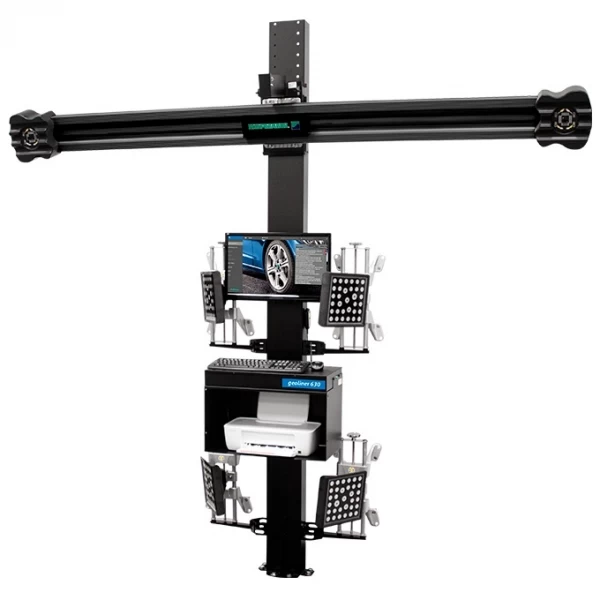
Wheel aligner geoliner® 630 Tilt Hofmann
- SKU: BD70454

Send Message
Description
Wheel Aligner geoliner® 630 Tilt Hofmann
Country of origin: Italy, warranty period – 24 months
The geoliner® 630 Tilt wheel aligner is a compact yet highly functional solution for automotive service centers where space-saving is essential. This model stands out with its innovative design featuring an integrated column and a tilting cross beam, making it ideal for convenient work even in tight spaces. The geoliner® 630 Tilt supports wireless connection with a tablet, which can be used as a secondary display. The upgraded software with real-time automatic error correction and an optimized alignment process helps service centers increase both efficiency and profit.
Features:
- Real-time error correction – faster workflow with fewer steps
- Advanced notification system – real-time detection and correction of alignment errors
- Remote-controlled tilting beam – convenient for working in different positions
- 22" TFT widescreen monitor – clear display and easy control
- AC100 wheel clamps – fast and secure attachment to the tire without touching the rim
Technical Specifications:
- Power supply: 110–240 V, 50/60 Hz
- Track width: 48"–96" / 122–244 cm
- Wheelbase: 79"–180" / 201–457 cm
Adjustments:
- A-Arm – A-shaped suspension arm, essential for alignment
- Cradle – Metal frame or structure supporting the engine or chassis
- Drag Link – Steering linkage transferring motion between the steering gear and tie rods
- Elevated – Condition where the vehicle is lifted off the ground (e.g., on a lift)
- EZ-Toe – Special tool or function for easy toe adjustments with wheels removed
- Help Videos – Instructional videos on tool usage and measurement steps
- Parts & Tools – All necessary components and tools for repairs or adjustments
- Parts Calculator – Digital tool to calculate required parts or quantities
- Single Tie Rod – Steering system design with one main tie rod, typical in simpler systems
Measurements:
- Frame Angle – The tilt of the chassis or frame, crucial for alignment
- Manual Ride Height – Manually measuring and setting ride height according to manufacturer specifications when automatic adjustment is unavailable
- Max Turn – The maximum steering angle, useful for evaluating steering limits
- On-Demand Ride Height – Real-time adjustment of ride height using air suspension
- ROMESS (optional) – Precision tool for measuring ride height
- SAI (Steering Axis Inclination) – Angle between vertical and steering axes, affecting steering return and stability
- TIP (Target Ride Height) – Manufacturer-defined standard ride height used for alignment calibration
- Toe Out On Turns – Difference in toe angles between inner and outer wheels during a turn, ensuring correct wheel rotation per Ackermann principle
Advanced Notification System
- Maximizes work efficiency and accuracy by automatically detecting and correcting issues such as suspension stress or environmental conditions. Technician involvement is only needed when additional input is required.
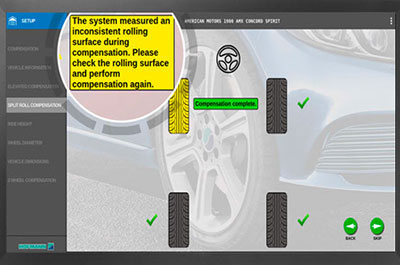
Real-Time Error Correction and Optimized Workflow
- Boosts productivity by removing unnecessary steps. Real-time error correction and an optimized alignment workflow allow service centers to increase throughput and alignment service capacity.
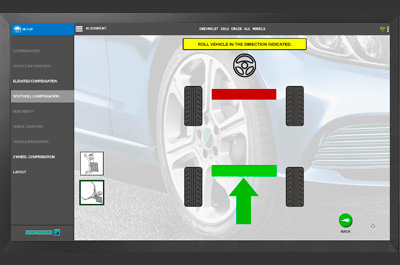
Small Footprint
- Maximize your shop floor space with a compact unit that takes up very little room, yet provides storage for printers and targets.
VODI™ (Vehicle Orientation Directional Indicator)
- Using red and green LED signals, patented VODI™ technology guides technicians through the alignment process even when the monitor is out of sight, reducing time spent walking back and forth between the vehicle and aligner.
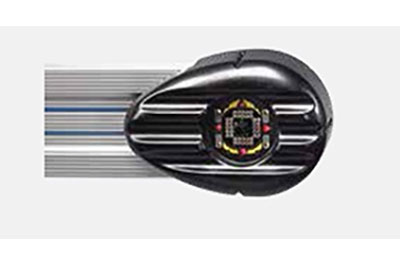
XD Camera
- High-resolution, high-speed cameras continuously monitor the alignment process and instantly detect common environmental conditions or vehicle issues that may cause misalignment.
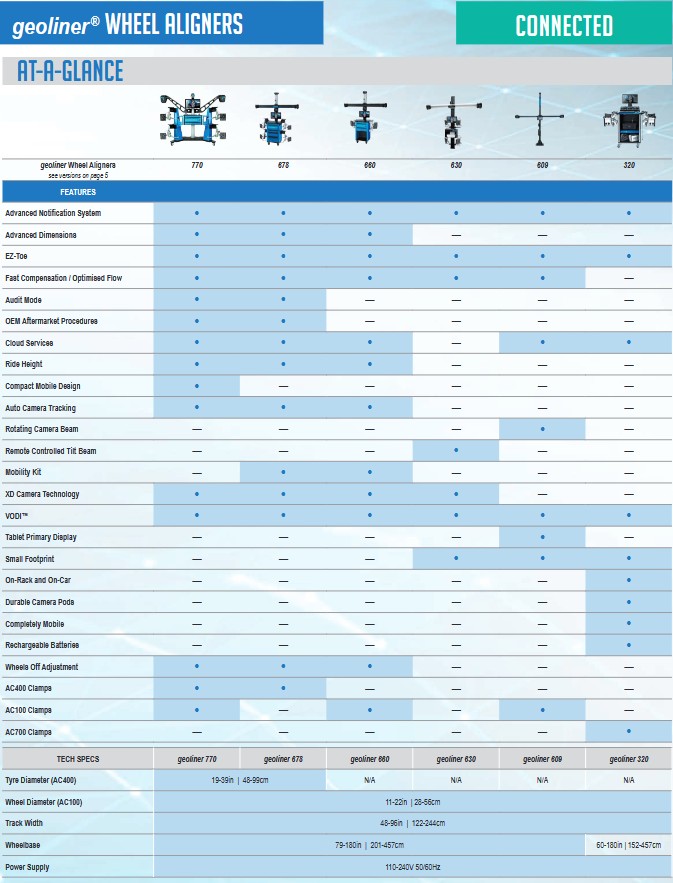
COMPARATIVE TABLE OF WHEEL ALIGNMENT SYSTEMS

-600x600.webp "Universal key Autel IKEY (Four Buttons)")
-600x600.webp "Cordless impact wrench 18V Li-ion, 1700 Nm Fluxon")