
OBD2 Scanner or Professional Diagnostic Tool - What Is the Difference?
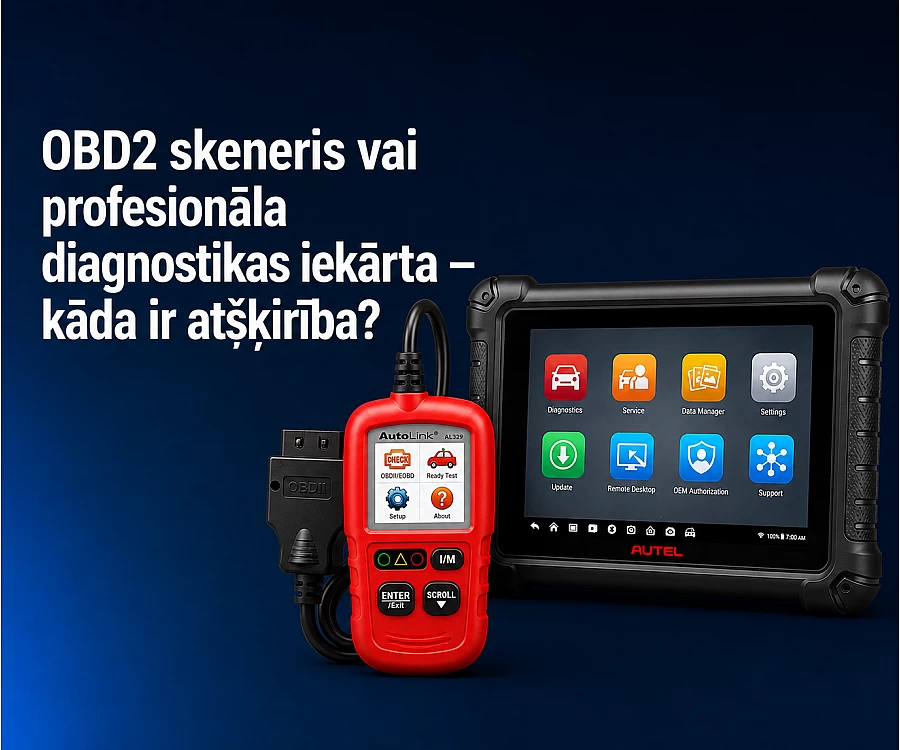
Both an OBD2 scanner and a professional diagnostic tool are used to check a vehicle's electronic systems, but the depth of diagnostics they provide is very different.
The presence of an OBD2 diagnostic port does not mean that every OBD2 scanner can diagnose all of the vehicle's electronic systems.
What is an OBD2 scanner?
OBD-II, or On-Board Diagnostics II, is a standardised vehicle self-diagnostic system that provides access to defined diagnostic information, particularly data related to the engine and emissions-control systems.
One of the main OBD-II functions is reading Diagnostic Trouble Codes, or DTCs. When a control system detects a defined malfunction, it may store a fault code that can be retrieved with a diagnostic device.
Depending on the specific OBD2 scanner, available functions may include:
- reading diagnostic fault codes;
- clearing fault codes;
- checking the Check Engine or MIL status;
- viewing Freeze Frame data;
- viewing OBD-II Live Data;
- checking I/M Readiness monitors;
- reading certain vehicle identification information.
It is important to understand that the term "OBD2 scanner" is used very broadly. It may refer to a simple Bluetooth adapter, a handheld code reader or a more capable diagnostic scanner.
For this reason, the label "OBD2" alone does not tell you how deeply a particular device can diagnose a vehicle.
OBD2 scanner vs professional diagnostic tool - a practical comparison
The difference is easiest to understand by comparing two specific devices. The AUTEL AutoLink AL329 is a basic OBD2 code reader, while the AUTEL MaxiCheck MX900 is a universal diagnostic tablet designed for broader professional diagnostic work.
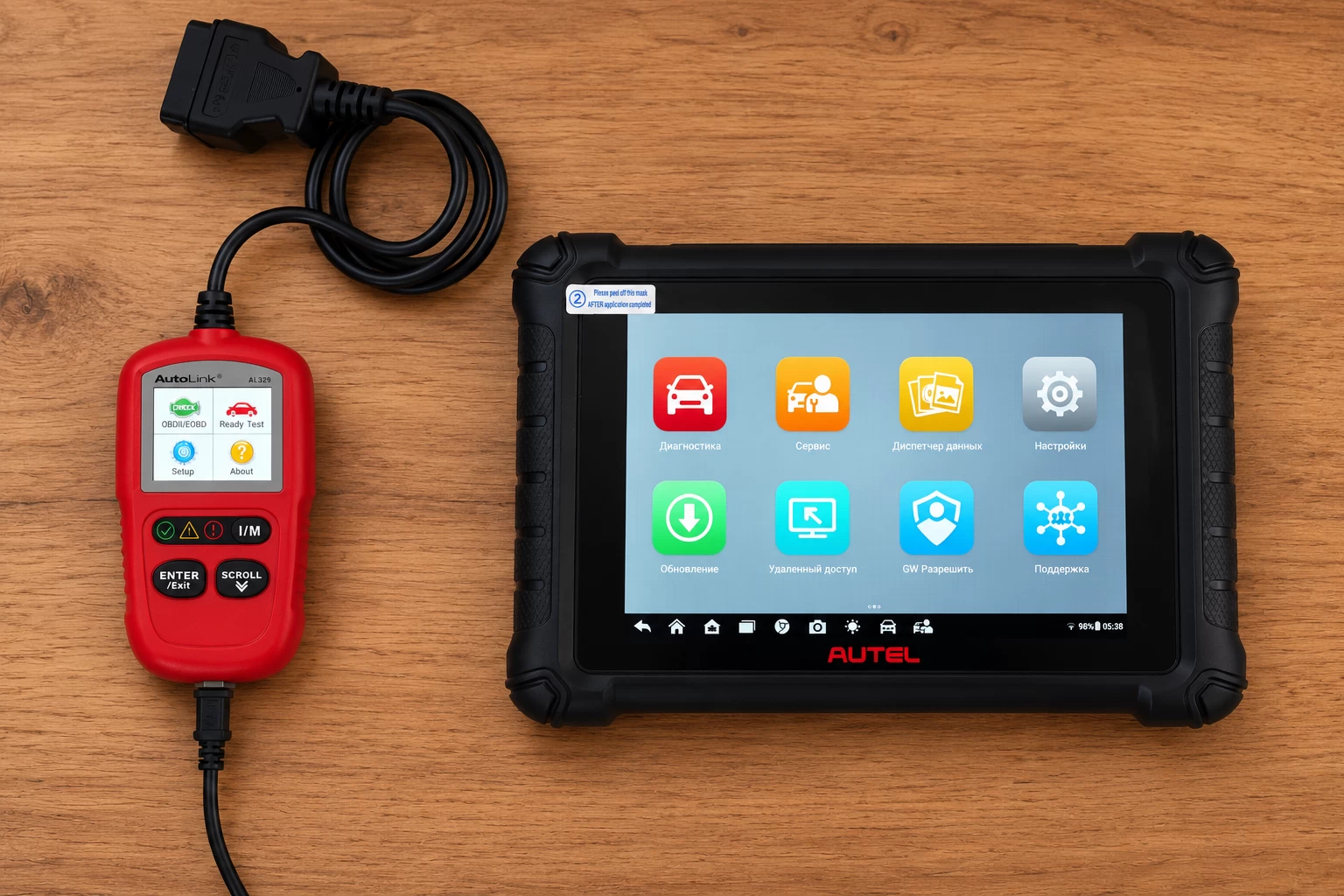
| Function | AUTEL AutoLink AL329 | AUTEL MaxiCheck MX900 |
|---|---|---|
| Device type | OBD2 code reader | Universal diagnostic tablet |
| Read OBD-II fault codes | Yes | Yes |
| Clear OBD-II fault codes | Yes | Yes |
| Freeze Frame | Yes | Yes |
| OBD-II Live Data | Yes | Yes |
| I/M Readiness | Yes | Yes |
| Diagnostics of additional control systems | No - designed for basic OBD-II diagnostics | Yes - for supported control systems |
| Scan of all supported systems | No | Yes |
| Auto Scan | No | Yes |
| Active Test | No | Yes, where supported by the specific vehicle and function |
| Service functions | No | Yes, with availability depending on the vehicle |
| Special functions and adaptations | No | Yes, where supported on the specific vehicle |
Note: MaxiCheck MX900 function availability may vary according to vehicle make, model, model year and control system. Before choosing a diagnostic tool, check support for the vehicles and functions you actually need.
The comparison shows the core difference clearly: the AL329 is focused on standardised OBD-II diagnostics, while the MX900 adds access to a much broader range of supported control systems and diagnostic functions.
What does a basic OBD2 scanner do well?
A simple OBD2 code reader is not an inferior version of professional diagnostics. It is a tool designed for a specific purpose.
A good example is the AUTEL AutoLink AL329, which is designed for basic OBD-II diagnostics. Its functions include reading and clearing DTCs, Freeze Frame, OBD-II Live Data and I/M Readiness checks.
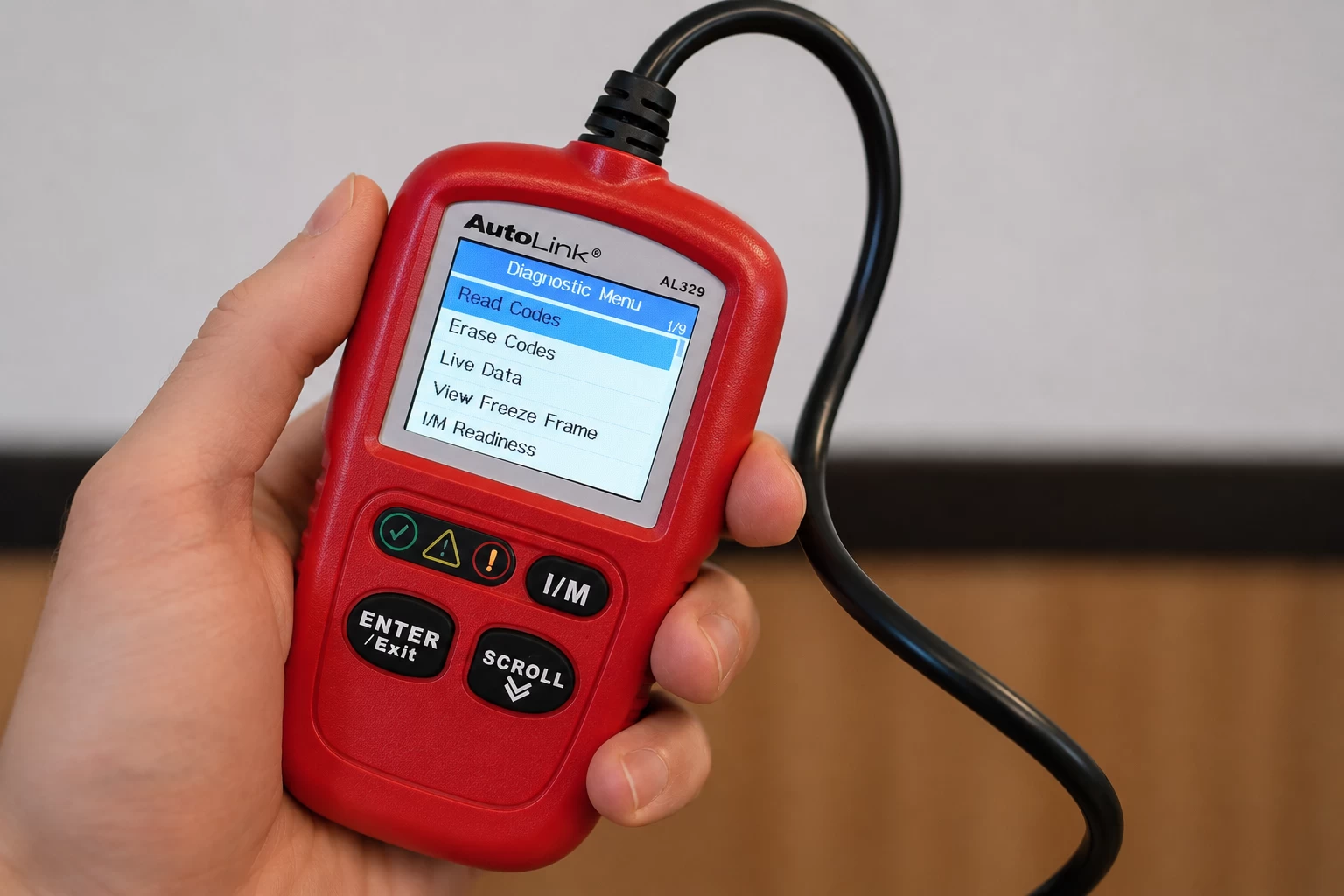
If the Check Engine light comes on and you need to identify the fault code stored by the engine-management system, this type of device can be a useful starting point.
Where do the limitations of a basic OBD2 scanner begin?
In a modern vehicle, the engine control unit is only one of many electronic control systems.
Depending on the vehicle, separate control units may manage systems such as:
- ABS;
- SRS and airbags;
- transmission;
- electronic parking brake;
- body electronics.
Connecting an OBD2 scanner to the vehicle's diagnostic port does not automatically give the scanner access to all of these systems.
A professional diagnostic system can, where supported, communicate with a much wider range of vehicle control units and provide make-specific diagnostic functions.
A fault code is not the same as a diagnosis
One of the most common diagnostic mistakes is treating a fault code as a direct instruction to replace a particular component.
For example, if a fault is recorded in a sensor circuit, possible causes may include:
- the sensor itself;
- damaged or broken wiring;
- a poor electrical connection or connector;
- a power-supply problem;
- a poor ground connection;
- a fuse;
- another fault elsewhere in the system.
This is why the diagnostic process does not normally end when a fault code has been read.
The fault code provides a starting point. The technician then uses available diagnostic data, electrical measurements, Active Test, technical documentation and mechanical checks to narrow down the cause of the problem.
Reading a fault code and diagnosing the cause of a fault are not the same process.
Live Data - how does the available information differ?
Live Data is not exclusive to professional diagnostic tablets. Many basic OBD2 scanners can display standardised OBD-II parameters such as engine speed, coolant temperature or fuel-trim data.
The advantage of a professional diagnostic tool is the broader range of available parameters and control systems. Where the vehicle is supported, it can also provide make-specific and control-unit-specific Live Data beyond the standardised OBD-II information.
The real difference is therefore not simply whether a tool has Live Data, but which data it can access and from which vehicle systems.
What do Active Test and service functions add to diagnostics?
Active Test allows a diagnostic tool to send a command to a supported control unit and activate a specific component or function.
This capability is not part of the basic OBD2 code-reader class. In professional diagnostics, Active Test gives the technician another way to check system response and narrow down the possible cause of a fault.
Active Test alone does not prove which component or part of an electrical circuit has failed. The result must be assessed together with other diagnostic data and tests.
Depending on the vehicle, professional diagnostic tools may also provide service functions such as electronic parking brake service, oil-service reset, battery registration, DPF procedures and various adaptations.
These functions are not universal. Their availability must be checked for the specific diagnostic tool and vehicle.
Is there a middle ground between an OBD2 reader and a professional diagnostic tablet?
Yes. Diagnostic devices do not have to be divided into only two categories.
A good example is the LAUNCH Creader Professional CRP129 EVO. In addition to OBD-II functions, it provides core diagnostic functions for the engine, automatic transmission, ABS and SRS systems, together with several service functions.
It is an example of a diagnostic scanner that provides considerably more capability than a basic OBD2 code reader, without being the same class of universal diagnostic platform as the MX900.
When is an OBD2 scanner enough?
For a private vehicle owner, it can help identify why the Check Engine light has come on and provide initial information before a repair.
For a car enthusiast, it can be a useful tool for viewing basic OBD-II data and vehicle operating parameters.
Before or after a repair, it can be used for a quick check of OBD-II fault codes and system status.
In a workshop, a simple OBD2 scanner can serve as a quick secondary tool for an initial OBD-II check, even when the workshop already has a professional diagnostic tablet.
If these requirements match the intended use, there is no need to buy a professional diagnostic platform simply for the sake of having more functions.
When do you need a professional diagnostic tool?
A professional diagnostic tool becomes important when your work regularly goes beyond standardised OBD-II information and requires access to several vehicle control systems.
This is particularly relevant when you need:
- diagnostics for ABS, SRS, transmission or other control systems;
- broader make-specific Live Data analysis;
- scanning of all supported systems;
- Active Test;
- service functions;
- adaptations.
Once it is clear that a basic OBD2 scanner is no longer sufficient, the next step is to choose the appropriate level of professional diagnostic equipment according to the vehicles you service and the functions you need.
For a detailed selection process, see the BalticDiag guide "How to Choose a Diagnostic Tool for an Auto Workshop".
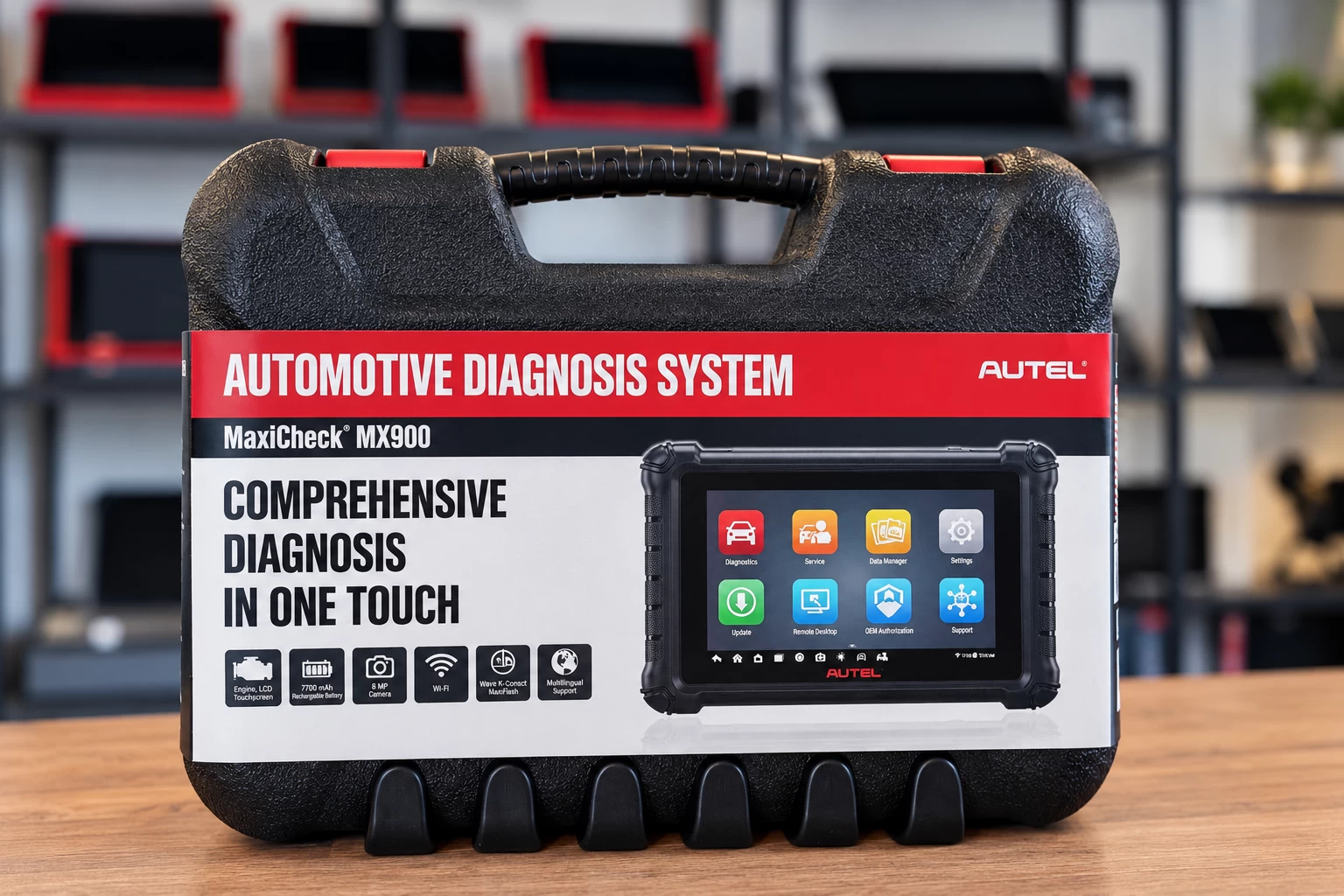
Need help choosing a diagnostic tool?
If you are not sure which level of diagnostic equipment is right for your work, visit the BalticDiag Latvia store in Riga.
You can view and compare different diagnostic tools in person, discuss the functions you need and get help selecting a solution that matches your actual requirements.
View car diagnostic equipmentFrequently asked questions
Can an OBD2 scanner diagnose ABS?
The term OBD2 does not by itself guarantee ABS diagnostic support. Basic OBD2 scanners are primarily designed for standardised OBD-II diagnostics. ABS support must be checked for the specific diagnostic device and vehicle.
Can an OBD2 scanner display Live Data?
Yes. Many OBD2 scanners can display standardised OBD-II Live Data parameters. On supported vehicles, professional diagnostic tools can provide a much broader range of make-specific and control-unit-specific data.
Can an OBD2 scanner clear a Check Engine fault?
An OBD2 scanner can clear supported diagnostic fault codes and, where applicable, switch off the Check Engine indicator. Clearing the code does not repair the underlying fault. If the problem remains, the fault may be recorded again.
Do all OBD2 scanners offer the same functions?
No. "OBD2 scanner" is a broad term. One device may provide only basic fault-code functions, while another may add Live Data, diagnostics for additional systems or service functions. Always check the capabilities of the specific device.
Can an OBD2 scanner replace a professional diagnostic tool?
If you only need basic OBD-II diagnostics, a professional tool may not be necessary. If you need access to several control systems, make-specific data, Active Test or service functions, a basic OBD2 scanner does not replace a professional diagnostic platform.
Is an OBD2 scanner enough for an automotive workshop?
An OBD2 scanner can be useful as a quick or secondary diagnostic tool. If the workshop regularly diagnoses ABS, SRS, transmission and other electronic systems or uses Active Test and service functions, a broader professional diagnostic system is required.